
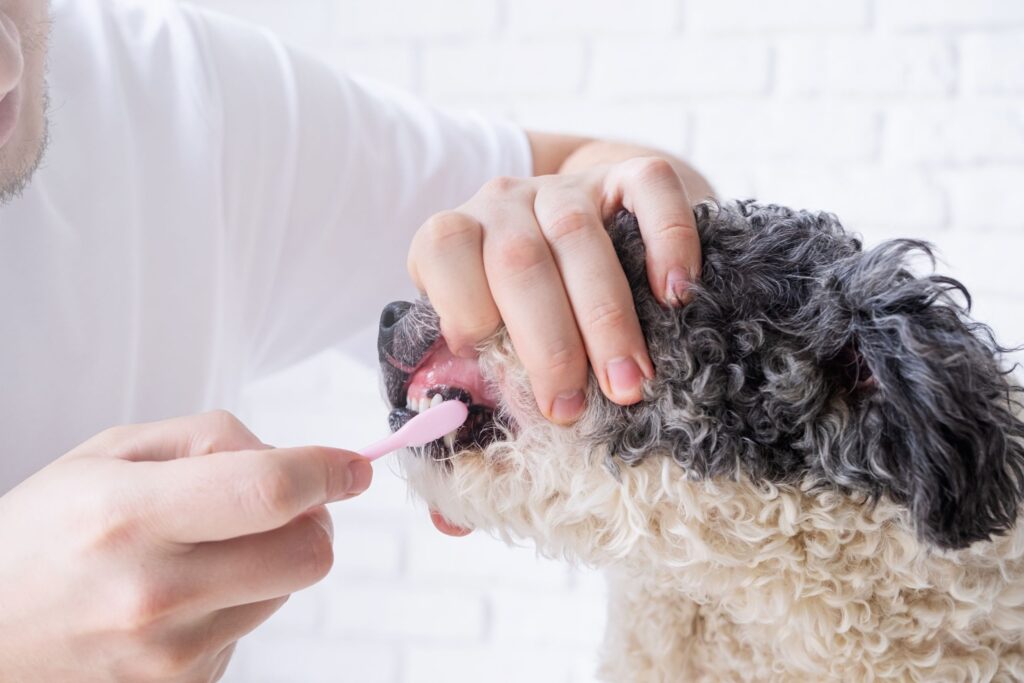
Dog gum color can provide useful clues about circulation, oxygen delivery, dental health, and certain medical conditions. A color change does not identify a disease on its own, but it may be one of the first visible signs that something is wrong.
Learning what your dog’s gums normally look like makes unusual changes easier to recognize. Check them occasionally when your dog is relaxed and healthy, rather than waiting until an illness or emergency occurs. If the gums suddenly look pale, white, blue, yellow, or unusually red, contact a veterinarian for guidance.
What Is a Healthy Dog Gum Color?
A healthy dog’s gums are generally pink, although the exact shade varies between dogs. Normal gums should also look smooth and feel moist rather than dry, sticky, swollen, or painful.
Not every healthy dog has completely pink gums. Some dogs naturally have black, brown, or spotted pigmentation in their mouths. This pigmentation may cover part or most of the gums and can be normal when it has always been present.
If your dog has dark gums, look for an area that naturally has less pigmentation. You can also become familiar with the normal appearance of the tongue and inner eyelids. Do not assume that a new dark spot or a changing raised area is natural pigmentation. New oral changes should be evaluated.
Taking a clear photograph of your dog’s gums while your pet is healthy can create a useful reference for future comparisons.
How Should You Check Your Dog’s Gums?
Choose a well-lit room and wait until your dog is calm. Gently lift the upper lip without forcing the mouth open. Observe the gum tissue above the teeth and compare both sides of the mouth.
Look at more than color. Check whether the gums appear:
- Moist or unusually dry
- Smooth or swollen
- Evenly colored or newly discolored
- Free from bleeding
- Comfortable when touched gently
- Free from unexplained lumps or sores
Do not continue if your dog appears frightened, in pain, or likely to bite. A veterinary professional can examine the mouth safely.
Madison Veterinary Hospital evaluates gum appearance as one part of a complete physical examination. Gum color must be interpreted alongside breathing, heart rate, hydration, behavior, medical history, and other clinical findings.
Dog Gum Color Chart: What Different Colors May Mean
This dog gum color chart offers general guidance, but it should not be used to diagnose your dog at home.
| Gum appearance | What it may indicate | Recommended action |
| Pink and moist | Often normal for that dog | Continue routine observation |
| Naturally black or spotted | Normal pigmentation when unchanged | Monitor for new or changing areas |
| Pale pink or white | Anemia, blood loss, shock, or poor circulation | Contact a veterinarian promptly |
| Blue or purple | Inadequate oxygen delivery | Seek emergency veterinary care |
| Yellow | Jaundice or a blood, liver, or gallbladder problem | Arrange prompt veterinary evaluation |
| Bright or unusually red | Heat illness, inflammation, irritation, or another problem | Assess other symptoms and contact a veterinarian |
| Dry or sticky | Possible dehydration or illness | Contact a veterinarian if persistent or accompanied by symptoms |
Color interpretation can be affected by lighting and natural pigmentation. Compare any change with your dog’s normal appearance and consider how your dog is behaving.
If your dog’s gums suddenly change color, contact Madison Veterinary Hospital for guidance on the safest next step.
What Can Pale Gums in Dogs Mean?
Pale gums in dogs may appear light pink, grayish, or nearly white. They can occur when there are too few circulating red blood cells, when blood flow is reduced, or when blood loss has occurred.
Possible causes include:
- External or internal bleeding
- Anemia
- Shock
- Certain toxins
- Parasite-related blood loss
- Immune-mediated disease
- Clotting disorders
- Serious underlying illness
Pale gums are especially concerning when accompanied by weakness, rapid breathing, collapse, a swollen abdomen, black stool, vomiting blood, or visible bleeding.
Do not wait for pale gums to return to normal if your dog is also acting ill. Contact a veterinarian immediately. If the clinic is closed and your dog appears weak, has difficulty breathing, collapses, or shows evidence of significant bleeding, seek emergency veterinary care.
When Are Blue or Purple Gums an Emergency?
Blue, gray, or purple gums can indicate that the body is not receiving enough oxygen. A dog may also have labored breathing, noisy breathing, weakness, confusion, or collapse.
This is an emergency. Transport the dog to the nearest emergency veterinary facility while minimizing stress and activity. Do not place anything inside the dog’s mouth or delay care to continue checking the gums.
Why Might a Dog’s Gums Look Yellow?
Yellow gums may be a sign of jaundice, which develops when bilirubin accumulates in the body. A yellow tint may also be visible in the whites of the eyes, inner ears, or skin.
Jaundice can be associated with problems involving red blood cells, the liver, gallbladder, or bile ducts. It requires veterinary evaluation and diagnostic testing. It cannot be diagnosed or treated safely based on gum color alone.
Are Red Gums Always a Dental Problem?
Redness limited to the edges around the teeth may be associated with gingivitis or other oral inflammation. You may also notice bad breath, tartar, bleeding, or discomfort while eating.
However, widespread bright red gums can occur with overheating or other medical problems. Consider the entire situation. Heavy panting, weakness, vomiting, confusion, or collapse following heat exposure requires immediate action.
Madison Veterinary Hospital can determine whether red gums originate from dental disease, localized irritation, heat exposure, or another health concern.
Can Normal Dog Gum Color Change Temporarily?
Minor differences may occur with activity, temperature, lighting, or pressure on the gum tissue. However, a clear or persistent change from your dog’s normal gum color should not be dismissed.
Gum color is only one health indicator. A dog can have pink gums and still be unwell, while naturally dark pigmentation can make visual assessment more difficult. Always consider appetite, breathing, energy, movement, vomiting, diarrhea, and other changes.
When Should You Contact a Veterinarian?
Arrange veterinary care if you notice:
- Pale, white, blue, purple, or yellow gums
- New or unexplained discoloration
- Bleeding that does not stop
- Swelling, ulcers, or oral growths
- Pain when eating or opening the mouth
- A color change accompanied by vomiting or diarrhea
- Dry or sticky gums with reduced energy
- Any sudden change that concerns you
Seek emergency care for blue gums, breathing difficulty, collapse, severe weakness, suspected poisoning, significant blood loss, or pale gums accompanied by signs of shock.
Schedule an examination with Madison Veterinary Hospital if your dog’s gum color, texture, or overall oral health has changed.
Frequently Asked Questions
What color should dog gums be?
Most healthy dogs have pink, moist gums. However, some dogs naturally have black, brown, or spotted pigmentation. The most useful comparison is your dog’s usual appearance.
Are black gums normal in dogs?
Black or spotted gums can be completely normal when the pigmentation has always been present. New, raised, bleeding, or changing dark areas should be examined by a veterinarian.
Do pale gums in dogs always mean anemia?
No. Anemia is one possible cause, but pale gums may also be associated with blood loss, shock, poor circulation, toxins, or another illness. Veterinary testing is needed to identify the cause.
Can dehydration change dog gum color?
Dehydration may make the gums feel dry or sticky and can affect their appearance. Because dehydration can accompany many illnesses, persistent changes should be discussed with a veterinarian.
Should I use a dog gum color chart to diagnose illness?
No. A chart can help you recognize concerning changes, but it cannot establish the cause. Gum color should be assessed together with your dog’s symptoms and a veterinary examination.