
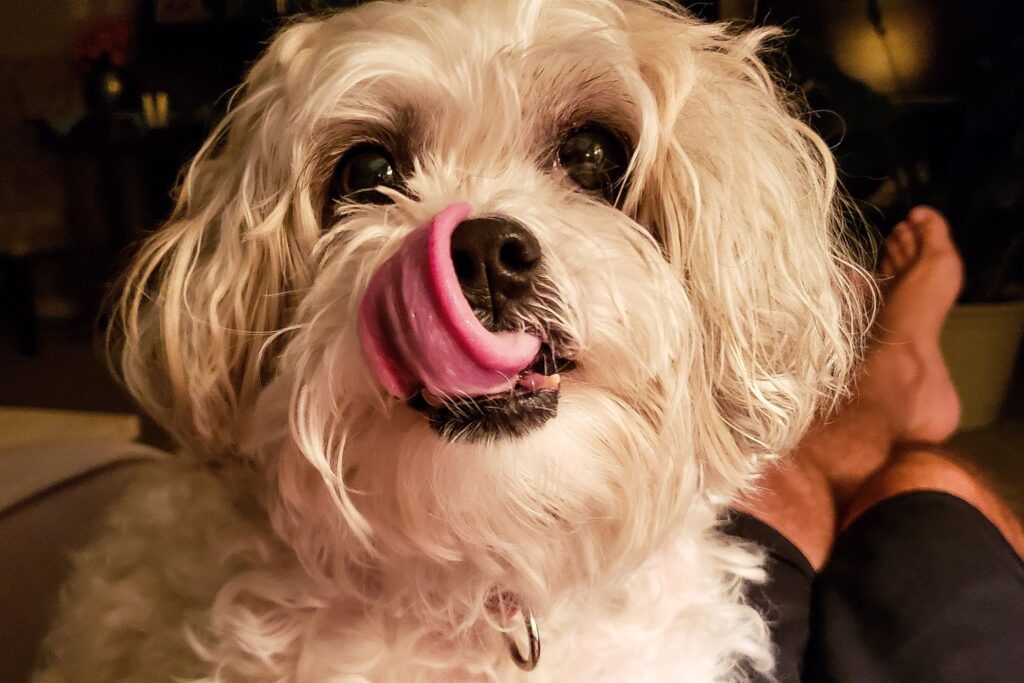
Dog excessive licking may seem like a harmless habit, but repeated licking can be your dog’s way of responding to itching, pain, infection, stress, or another underlying problem. Occasional grooming is normal. However, when a dog repeatedly licks the same area, cannot easily be distracted, or begins damaging the skin, the behavior deserves attention.
Many pet owners ask, “Why is my dog licking excessively?” There is no single answer that applies to every dog. The location of the licking, when it started, and whether other symptoms are present can all help a veterinarian identify the cause.
When Does Normal Licking Become Excessive?
Dogs naturally lick themselves to remove dirt, groom their coats, or respond to a temporary irritation. The behavior may be considered excessive when your dog:
- Licks the same area repeatedly
- Interrupts sleep or normal activities to lick
- Causes redness, swelling, hair loss, or sores
- Continues licking despite being redirected
- Chews or bites the affected area
- Develops a bad odor or discharge from the skin
- Appears restless or uncomfortable
A dog constantly licking may be experiencing discomfort rather than simply displaying a behavioral habit. Watching where and when your dog licks can provide useful information for your veterinarian.
Common Causes of Excessive Dog Licking
The causes of excessive licking in dogs range from minor irritation to medical or behavioral conditions. The following are among the most common possibilities.
Allergies
Environmental, food, and flea allergies can make a dog’s skin itchy. Dogs with allergies may lick their paws, legs, belly, or other affected areas. Recurrent ear irritation, redness between the toes, or seasonal symptoms may also occur.If allergy-related itching is suspected, professional allergy testing and skin care for pets can help identify possible triggers and guide appropriate treatment.
Allergies are a particularly common explanation for a dog licking paws excessively. Pollen, grass, dust mites, mold, certain foods, and flea bites may contribute to the irritation.
Skin Infections
Bacterial and yeast infections can cause itching, redness, odor, greasy skin, and discomfort. Licking can further damage the skin, allowing an infection to worsen. Sometimes an allergy starts the problem, while persistent licking and moisture create conditions that encourage secondary infection.
Parasites
Fleas, mites, and ticks can irritate the skin and lead to licking or chewing. Even when parasites are not immediately visible, they may still be responsible. Keeping your dog on veterinarian-recommended parasite prevention can reduce this risk.
Pain or Injury
Dogs often lick painful areas. A splinter, cut, torn nail, insect sting, joint problem, or soft-tissue injury may cause focused licking. In older dogs, persistent licking around a leg or joint may also be associated with discomfort that requires dog arthritis treatment. If your dog suddenly begins licking one paw or leg, examine the area carefully without pressing or manipulating anything painful.
Stress and Boredom
Anxiety, routine changes, insufficient stimulation, or long periods alone may contribute to repetitive licking. However, behavioral causes should not automatically be assumed. Consider a medical problem first, especially if the behavior is new or the skin has changed.
Caring for pets since
1970
Independent. Compassionate. Pet-centered.Concerned About Your Dog’s Repeated Licking?
Irritated skin and repeated licking can be uncomfortable for your dog. Get to know the independent veterinary team at Madison Veterinary Hospital and learn about their thoughtful, client-centered approach to care.
Meet Our Veterinary Team →What Dog Licking Paws Excessively May Indicate
A dog licking paws excessively may be responding to allergies, an injury, parasites, infection, or another source of irritation. Licking all four paws may be associated with allergies, while sudden attention to one paw could indicate a cut, foreign object, damaged nail, or insect sting.
Check the paws for:
- Redness between the toes
- Swelling or tenderness
- Cuts, thorns, or foreign material
- Broken or damaged nails
- Unusual odor or discharge
- Brown saliva staining on light-colored fur
Do not apply human creams, pain relievers, or essential oils unless instructed by a veterinarian. Some products that are safe for people can be irritating or toxic to dogs.
Why a Dog Licking Skin Excessively Should Not Be Ignored
A dog licking skin excessively can create a self-perpetuating cycle. The original irritation causes licking, but the continued friction and moisture further inflame the skin. This can lead to hair loss, open sores, thickened skin, infection, or a persistent lesion sometimes called a lick granuloma.
At Madison Veterinary Hospital, the veterinary team evaluates both the affected skin and the possible underlying trigger. Depending on the findings, diagnosis may involve a physical examination, skin testing, parasite checks, laboratory testing, or discussion of the dog’s diet, environment, and behavior.
How to Stop Excessive Licking in Dogs Safely
If you are wondering how to stop excessive licking in dogs, the most important step is identifying why it is happening. Simply interrupting the behavior will not resolve an allergy, infection, parasite problem, or painful injury.
Until your dog can be evaluated, you can:
- Check the area gently for visible injuries or debris.
- Keep irritated skin clean and dry.
- Prevent licking with a properly fitted recovery collar if advised.
- Record when the licking occurs and what area is affected.
- Note recent changes in food, environment, routine, or parasite prevention.
- Avoid home remedies and human medications without veterinary approval.
Treatment depends on the diagnosis and may include parasite control, allergy management, treatment for bacterial or yeast infections, wound care, pain management, diet changes, or behavioral support. Madison Veterinary Hospital can develop an individualized plan based on your dog’s symptoms and medical history.
When to See a Vet for Excessive Licking
Knowing when to see a vet for excessive licking can help prevent a small concern from becoming a painful skin problem. Arrange an appointment if licking persists, repeatedly returns, or causes visible skin changes.
Seek prompt veterinary attention if your dog has:
- An open or bleeding wound
- Significant swelling or severe redness
- Pus, discharge, or a strong odor
- Sudden limping or obvious pain
- Rapidly spreading irritation
- Facial swelling or difficulty breathing
- Lethargy, vomiting, or loss of appetite
Madison Veterinary Hospital can help determine whether the licking is related to dermatologic disease, pain, parasites, infection, or behavior. Early evaluation often makes the underlying condition easier to manage.
Is Your Dog Licking Constantly?
Persistent licking can make your dog sore and uncomfortable. If it’s painful, ongoing, or causing skin irritation, contact our veterinary team to discuss a visit and the next steps.
Contact Our Veterinary Team →Frequently Asked Questions
Why is my dog licking excessively?
Excessive licking may be caused by allergies, parasites, skin infections, pain, injuries, anxiety, or boredom. A veterinarian can examine your dog and determine which cause is most likely.
Why is my dog constantly licking one spot?
Focused licking may indicate a wound, painful joint, foreign object, insect bite, infection, or localized skin irritation. Check the area gently and arrange veterinary care if the licking continues.
Is a dog’s excessive licking always caused by anxiety?
No. Anxiety can contribute to repetitive licking, but allergies, infections, parasites, and pain are also common causes. Medical possibilities should be evaluated before assuming the behavior is purely emotional.
Can excessive licking cause an infection?
Yes. Repeated licking can damage the skin and keep it moist, increasing the risk of bacterial or yeast infection. Warning signs include redness, odor, discharge, swelling, and sores.
How can I stop my dog from licking irritated skin?
Preventing access with a veterinarian-approved recovery collar may temporarily protect the area, but the underlying cause still needs treatment. Avoid applying human products unless your veterinarian specifically recommends them.