
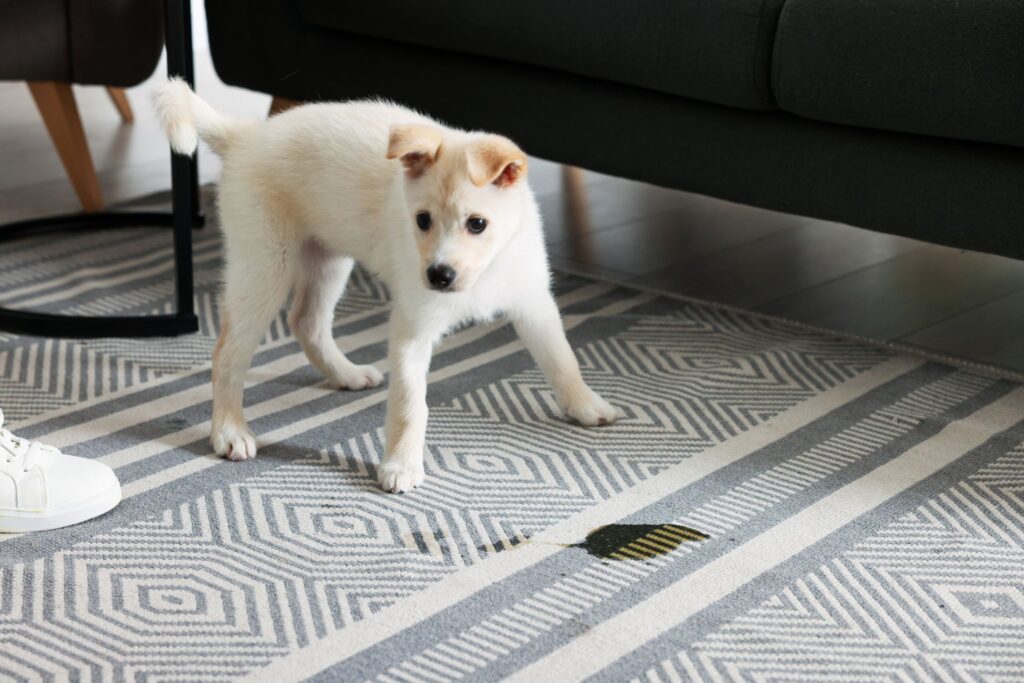
A dog peeing a lot may simply be responding to warm weather, increased exercise, or drinking more water than usual. However, a noticeable or persistent change in urination can also indicate a bladder problem, urinary infection, diabetes, kidney disease, medication side effect, or another medical condition.
Pay attention to both frequency and volume. A dog repeatedly passing a few drops has a different urinary pattern from a dog producing large amounts each time. These details help a veterinarian determine which tests and treatments may be needed.
How Can You Tell If Your Dog Is Peeing Too Much?
There is no single normal schedule for every dog. Age, size, diet, water intake, activity, medications, and weather can all affect how often a dog needs to urinate.
Focus on changes from your dog’s usual routine. Possible signs of frequent urination in dogs include:
- Asking to go outside more often
- Waking during the night to urinate
- Producing unusually large amounts of urine
- Squatting or lifting a leg repeatedly
- Passing only small amounts at a time
- Suddenly having indoor accidents
- Drinking noticeably more water
- Straining, whining, or appearing uncomfortable
- Leaking urine while resting or sleeping
- Blood, cloudiness, or an unusual odor in the urine
Keep a short record of when your dog urinates, how much comes out, and whether drinking habits have changed. Madison Veterinary Hospital can use this information alongside an examination and diagnostic testing to investigate the cause.
Is Frequent Urination Different From Producing More Urine?
Yes. These patterns may look similar but can have different causes.
A dog peeing frequently in small amounts may have bladder irritation, a urinary tract infection, bladder stones, or another lower urinary tract problem. The dog may repeatedly ask to go outside but produce only drops.
A dog producing large amounts of urine may also drink more water. This pattern can be associated with conditions affecting the kidneys, hormones, or blood sugar. Certain medications can also increase thirst and urine production.
Do not reduce your dog’s access to water to prevent accidents. Restricting water without veterinary guidance may cause dehydration or make an underlying condition more dangerous.
Why Is My Dog Peeing So Much?
Several medical and behavioral factors can cause a dog to urinate more than usual.
Urinary Tract Infection
A urinary tract infection can create urgency, discomfort, and frequent attempts to urinate. Some dogs also lick the genital area, have indoor accidents, or pass urine containing blood.
Bladder Stones or Irritation
Stones and inflammation can irritate the bladder or interfere with urine flow. Affected dogs may strain, pass small amounts, or appear uncomfortable while urinating.
Diabetes
Diabetes can cause increased thirst and the production of larger amounts of urine. Owners may also notice weight loss, appetite changes, or reduced energy.
Kidney Disease
When the kidneys cannot concentrate urine normally, a dog may urinate more and drink additional water to replace lost fluids. Kidney disease can occur at any age but becomes more common in older dogs.
Hormonal Conditions
Conditions affecting hormone production, including Cushing’s disease, can increase both thirst and urination. Other symptoms may include appetite, weight, skin, coat, or energy changes.
Medication
Certain medications may make a dog drink and urinate more. Never stop prescribed medication without first speaking with the veterinarian.
Age and Incontinence
Puppies have smaller bladders and need more frequent bathroom breaks. Older dogs may develop incontinence, mobility difficulties, cognitive changes, or health conditions that lead to indoor accidents.
If your dog’s urinary habits have changed, schedule an evaluation with Madison Veterinary Hospital to identify the cause and appropriate next step.
Why Is My Dog Peeing for a Long Time?
A dog peeing for a long time may be producing a large, steady volume of urine. This can occur after increased water consumption, but recurring episodes should be discussed with a veterinarian.
The phrase can also describe a dog remaining in position and struggling to urinate. Watch whether there is a normal stream, a weak stream, a few drops, or no urine at all.
Straining for a long time, crying, repeatedly attempting to urinate, or producing little to no urine may indicate a blockage or another painful urinary problem. An inability to pass urine is an emergency and requires immediate veterinary care.
Why Is My Dog Peeing in the House?
Pet owners may search “dog is peeing in house” when a previously house-trained dog suddenly starts having accidents. This change should not automatically be treated as disobedience.
Possible explanations include:
- Urinary infection or bladder inflammation
- Increased urine production
- Urinary incontinence
- Pain or reduced mobility
- Cognitive changes in an older dog
- Stress or anxiety
- Urine marking
- Incomplete house training
- Fewer opportunities to go outside
Medical causes should be considered before beginning a new training plan, especially when accidents begin suddenly. Do not punish your dog because punishment may increase stress without addressing the underlying problem.
When Is a Urination Problem an Emergency?
Seek emergency veterinary care if your dog:
- Cannot pass urine
- Repeatedly strains but produces only drops
- Cries or shows severe pain while attempting to urinate
- Has a swollen or painful abdomen
- Passes blood and appears weak or distressed
- Vomits, collapses, or becomes extremely lethargic
- May have swallowed a toxin
- Experiences a rapid worsening of symptoms
A urinary obstruction can prevent waste products from leaving the body and may quickly become life-threatening. Do not wait overnight to see whether a dog that cannot urinate improves.
How Will a Veterinarian Find the Cause?
The veterinarian will ask about your dog’s drinking, urination, appetite, medications, behavior, and recent changes. Testing may include:
- Urinalysis
- Urine culture
- Bloodwork
- X-rays
- Ultrasound
- Additional testing based on the findings
At Madison Veterinary Hospital, we base our diagnostic approach on the individual dog rather than the symptom alone. Treatment may involve medication, dietary management, improved bladder control, treatment of an underlying disease, or another targeted plan.
If the veterinary team requests a urine sample, ask how it should be collected and stored. A fresh sample may be helpful, but the clinic may need to collect a sterile sample for certain tests.
What Should You Monitor at Home?
Record your dog’s water intake, bathroom frequency, urine volume, indoor accidents, and associated symptoms. Note whether the dog is producing a normal stream or repeatedly passing small amounts.
Never give antibiotics, pain relievers, or leftover medication without veterinary guidance. Different urinary conditions can cause similar symptoms but require very different treatment.
Contact Madison Veterinary Hospital if your dog is peeing more than usual, having accidents, or showing discomfort during urination.
Frequently Asked Questions
Is it normal for a puppy to pee frequently?
Puppies generally need more bathroom breaks because they have smaller bladders and are still developing bladder control. However, sudden changes, pain, blood, or excessive thirst should be discussed with a veterinarian.
Why is my dog drinking and peeing a lot?
Warm weather and activity can temporarily increase thirst, but persistent increases may be associated with diabetes, kidney disease, hormonal conditions, medication, or another health issue.
Can a urinary tract infection make a dog pee in the house?
Yes. A urinary infection can create urgency and discomfort, causing even a house-trained dog to have accidents.
Is urine marking the same as frequent urination?
No. Marking usually involves small amounts placed in particular locations. Illness-related frequent urination may involve urgency, discomfort, increased volume, or other symptoms.
What should I do if my dog keeps trying to pee but nothing comes out?
Seek emergency veterinary care immediately. Repeated straining with little or no urine may indicate a urinary obstruction.