
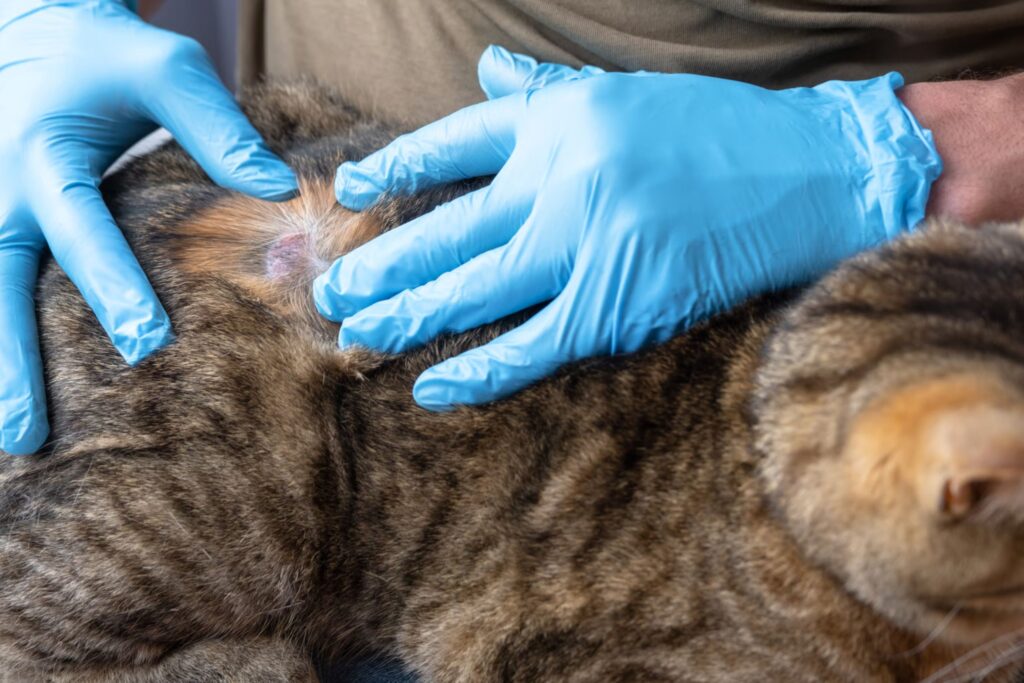
Mange in cats is a skin condition caused by microscopic mites that live on or burrow into the skin. Although feline mange is not as commonly discussed as mange in dogs, it can cause significant itching, irritation, hair loss, and skin damage. Some mite infestations can also spread between cats, other animals, and occasionally people.
A cat with mange needs an accurate veterinary diagnosis because allergies, flea infestations, ringworm, and bacterial skin infections can produce similar symptoms. Identifying the specific mite involved allows the veterinarian to recommend appropriate treatment and determine whether other pets in the home may also require care.
What Causes Mange in Cats?
Understanding what causes mange in cats begins with recognizing that mange is not one disease. It is a general term for skin conditions caused by different species of mites.
Cats may encounter mites through:
- Direct contact with an affected animal
- Shared bedding, grooming tools, or living spaces
- Contact with outdoor environments where certain mites live
- Exposure to an infected but asymptomatic cat
- Close contact with affected dogs or wildlife
Cats with weakened immune systems may be more vulnerable to certain forms of mite overgrowth. Generalized demodicosis, for example, can sometimes be associated with an underlying health condition that affects immune function.
Types of Mange in Cats
The different types of mange in cats do not all behave in the same way. The most important forms include:
Notoedric Mange
Notoedric mange, also called feline scabies, is caused by Notoedres cati. It is highly contagious and typically causes intense itching, crusting, and hair loss around the ears, face, head, and neck. Without treatment, the irritation may spread to other parts of the body.
Feline Demodicosis
Feline demodicosis is associated with Demodex mites. Demodex cati can affect hair follicles and may be linked with an underlying illness in generalized cases. Demodex gatoi lives closer to the skin’s surface and can spread between cats.
Ear Mites
Ear mites commonly affect cats and can cause frequent scratching, head shaking, ear inflammation, and dark debris inside the ears. Severe irritation may lead to wounds or secondary infection.
Walking Dandruff
Cheyletiella mites live on the surface of the skin and can produce excessive scaling that resembles dandruff. This infestation is contagious and may temporarily affect people who have close contact with an infested animal.
Signs of Mange in Cats
The signs of mange in cats depend on the type of mite and the severity of the infestation. Common warning signs include:
- Persistent scratching or biting
- Patchy or widespread hair loss
- Red or inflamed skin
- Dry scales or heavy dandruff
- Crusts around the face and ears
- Scabs or open sores
- Thickened skin
- Head shaking or dark ear debris
- Restlessness caused by itching
You can learn more about other possible explanations for hair loss in cats, as not every bald or irritated area is caused by mites.

If your cat is scratching constantly or developing crusts and hair loss, arrange a veterinary skin examination before the irritation worsens.
Meet Our Veterinary TeamWhat Does Mange Look Like in Cats?
Owners asking what mange looks like in cats should remember that appearance alone cannot confirm the condition. Affected skin may appear red, flaky, crusted, or thickened. Hair loss can occur in small patches or across larger areas.
Notoedric mange often begins around the ears, face, and neck. Demodicosis may cause localized hair loss around the head or become more widespread. Ear mites usually produce dark, crumbly material inside the ear canals.
The visible symptoms of mange in cats can resemble allergic skin disease, ringworm, flea allergy dermatitis, and other conditions. Madison Veterinary Hospital may recommend allergy testing and skin care for pets when the examination suggests that allergies or another dermatologic problem could be contributing to the symptoms.
How Do Cats Get Mange?
The answer to how cats get mange depends on the mite involved. Contagious mites generally spread through close contact with an infected animal. Cats living in shelters, multi-cat homes, or outdoor colonies may have increased exposure risk.
Some mites can also spread through contaminated bedding, brushes, blankets, or carriers, although direct contact is often the more important route. A cat without visible symptoms may still carry certain mites and transmit them to another cat.
If mange is suspected, temporarily limit contact between the affected cat and other pets until a veterinarian provides guidance. Wash your hands after handling irritated skin and ask your veterinarian whether other animals in the household should be examined.
How Veterinarians Diagnose Mange in Cats
A veterinarian will examine the affected skin, review the cat’s history, and ask about contact with other animals. Skin scrapings, hair samples, tape preparations, ear swabs, or microscopic examination may be used to look for mites.
Mites are not always easy to find, so additional testing may be necessary to rule out ringworm, allergies, bacterial infections, or underlying health conditions. Madison Veterinary Hospital provides advanced laboratory testing and diagnostics when further investigation is needed.
Mange Treatment for Cats
The correct mange treatment for cats depends on the mite species, the severity of the skin damage, and the cat’s general health. Treatment may include veterinarian-prescribed topical or oral parasite control, medicated bathing, ear treatment, or medication for secondary bacterial or yeast infections.
When owners search phrases such as “mange treatment cats” or “mange cats treatment,” they may find unverified home remedies. These should not replace veterinary care. Products made for dogs, particularly those containing ingredients unsafe for cats, can cause serious poisoning.
All medications should be given exactly as directed. Treatment may need to continue beyond the point when the skin begins looking better. Other pets in the household may also require treatment if a contagious mite is diagnosed.
How to Prevent Mange in Cats
Knowing how to prevent mange in cats can reduce exposure, although not every infestation is completely preventable. Helpful steps include:
- Keep your cat on veterinarian-recommended parasite prevention.
- Avoid contact with animals showing unexplained hair loss or crusted skin.
- Do not share brushes or bedding with unfamiliar animals.
- Clean carriers, blankets, and sleeping areas regularly.
- Have newly adopted cats examined before introducing them to other pets.
- Monitor indoor and outdoor cats for skin or ear changes.
- Schedule a routine pet wellness exam to identify developing health concerns.
Madison Veterinary Hospital can recommend preventive care based on your cat’s age, lifestyle, environment, and exposure risks.

Contact Madison Veterinary Hospital if your cat has persistent itching, hair loss, crusting, or another unexplained skin change.
Contact Our TeamFrequently Asked Questions
Is mange in cats contagious?
Some forms are highly contagious, while others behave differently. Notoedric mange, Demodex gatoi, ear mites, and walking dandruff can spread between animals. Your veterinarian can advise whether other pets need treatment.
Can indoor cats get mange?
Yes. Indoor cats can be exposed through a newly adopted pet, another animal in the home, contaminated items, or occasional outdoor contact.
Can people catch mange from cats?
Certain feline mites may cause temporary skin irritation in people. Contact a veterinarian regarding your cat and a physician if anyone in the household develops a rash after exposure.
How long does mange treatment take?
Treatment duration depends on the mite, severity, medication, and response. Some cats require repeated treatment and follow-up testing before the infestation is considered resolved.
Can I treat mange at home?
Mange should first be diagnosed by a veterinarian. Avoid dog parasite products, essential oils, or unverified home remedies because some substances can be dangerous for cats.